
Maintainability
Technology should remain understandable and manageable as the product and team grow over multiple years.
We use proven frontend, backend, mobile, database and cloud technologies to build software that is maintainable, scalable and ready for long-term growth.
We do not choose technology because it is fashionable. Architecture decisions are based on product requirements, team capability, maintainability, performance, integration needs and long-term ownership.
Technology should remain understandable and manageable as the product and team grow over multiple years.
Architecture should support increasing users, transaction volume, data complexity and evolving business logic.
Applications must remain responsive under real-world network conditions, peak promotional loads and production workloads.
Technology choices must protect long-term continuity, third-party integrations and straightforward engineer onboarding.
Structured across six engineering layers to build, scale and operate production-ready applications.
Modern frontend technologies for responsive, maintainable and product-focused web experiences with strict typing and component modularity.
Backend frameworks and runtime technologies for business logic, APIs, integrations and scalable application services with structured routing.
Flexible data platforms and application data layers built around operational workflows, reporting requirements and high data integrity.
Cross-platform technologies for customer-facing and internal business mobile applications with unified backend integration.
Deployment, hosting and infrastructure tools that support reliable production environments, automated builds and continuous delivery.
External platforms and APIs that connect digital products with payments, analytics, communication and real business operational workflows.
Inspect our verified technologies across client, server, data, mobile and cloud infrastructure.

Enterprise frontend applications with modular component architecture, dependency injection and two-way binding.
Component-driven UI library for dynamic dashboards, interactive tools and modular web applications.
React framework delivering server-side rendering, static generation and optimized Core Web Vitals for commerce.

Strict static type system for JavaScript ensuring robust codebases, IDE tooling and compile-time safety.

Asynchronous event-driven runtime engineered for high-concurrency network applications, APIs and microservices.

Progressive TypeScript framework providing opinionated architecture, modular structure and dependency injection.
Minimalist web framework providing lightweight routing, flexible middleware pipelines and high-speed API execution.
Standardized RESTful interface design, bi-directional webhook pipelines and JSON contract specifications.

Document-oriented NoSQL database engineered for high data throughput, dynamic schemas and horizontal scaling.
Schema validation and object data modeling layer for Node.js with built-in hooks and business validations.
Strategic indexing, compound keys, aggregation pipelines and relational mapping strategies for high performance.

Google cross-platform UI toolkit compiling to native ARM machine code for responsive 60fps mobile experiences.

Web-standard mobile framework leveraging Angular and Capacitor for rapid multi-platform app development.
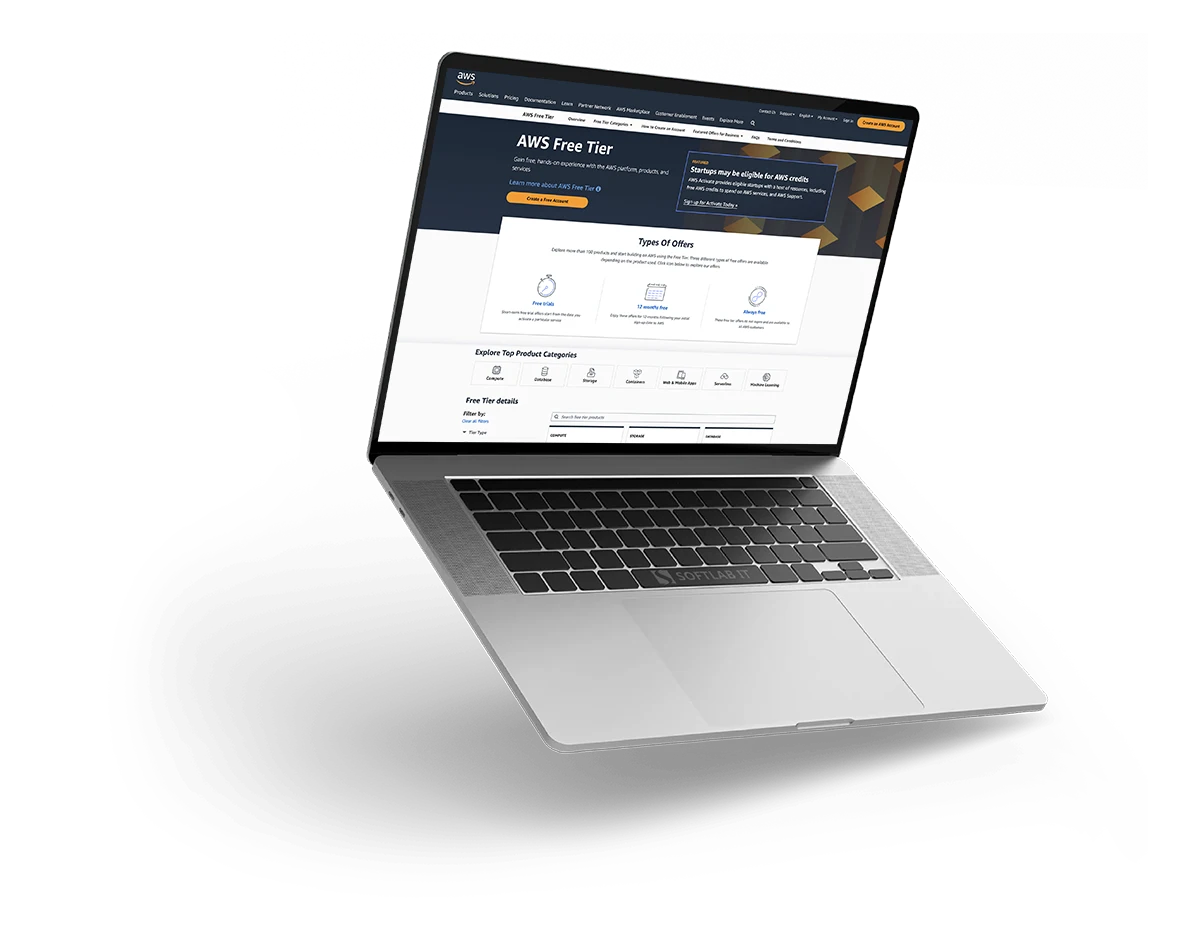
Cloud infrastructure hosting with EC2 computing, S3 storage, IAM security and CloudFront distribution.

Serverless frontend cloud deployment with automated CI/CD, preview environments and edge CDN routing.
Containerization standard ensuring identical software execution across staging, testing and production nodes.
Production reverse proxy, SSL/TLS termination, HTTP/2 acceleration, gzip compression and static caching.
Process management for Node.js clusters with zero-downtime reloads, paired with edge CDN and DDoS shielding.

Secure payment gateway integration supporting one-time payments, recurring subscriptions and global checkout.
Integration with regional financial providers and mobile wallets including bKash, Nagad, SSLCommerz and cards.
Server-side and client-side conversion tracking, data-layer setup, ecommerce analytics and event monitoring.
Bi-directional data exchange with ERPs, CRMs, logistics carriers, courier tracking and transactional messaging.
Technologies are tools. Sound software engineering principles guarantee long-term stability, performance and security.
Systems structured to accommodate user and data growth.
Applications are architected with clean layer separation, stateless services and scalable database configurations so traffic spikes do not require costly rewrites.
Isolating components for testability and continuous release.
Feature modules, domain entities and UI components are decoupled, allowing independent development, isolated testing and reliable ongoing refinement.
Documented contracts between frontend, backend and partners.
Standardized REST interfaces with consistent schemas ensure web clients, mobile apps and external third-party services communicate predictably.
Optimized response times, payload sizes and query execution.
From code-splitting and asset compression on the client to connection pooling and query profiling on the server, low latency is treated as a core requirement.
Security incorporated from architecture through deployment.
Role-based access control, cryptographic password hashing, strict input sanitization, CSRF/CORS mitigation and secure environment variable handling.
Strict typing and conventions protecting long-term longevity.
TypeScript enforcement, strict linting rules, readable directory structures and clean architectural patterns protect software maintainability for years.
How we combine frontend, backend and database technologies to deliver mission-critical software.
Complex Operational Systems & Workflows
Suitable for role-based internal systems, manufacturing management, inventory control, automated approval pipelines and executive dashboards.
High-Concurrency Commerce Platforms
Used for scalable retail commerce, multi-vendor marketplaces and integrated online business platforms handling real-time order volume.
Subscription Platforms & Web Applications
Engineered for multi-tenant software, subscription-based billing models, interactive user workspaces and data-rich real-time dashboards.
Cross-Platform iOS & Android Applications
Cross-platform native-feeling applications sharing core backend business logic, payment gateways and unified data layers.
Note: Technology choices vary based on product scope, performance expectations and business constraints.
Real production systems built with our verified engineering stack across diverse industries.

Centralized launch ticketing, cabin allocation and fleet operations platform.
Eliminated double-booking across river terminals and automated passenger manifest generation.

Enterprise electronics retail platform supporting high-concurrency peak campaigns.
Resilient checkout stability during nationwide promotional campaigns with multi-warehouse fulfillment.

Scalable multi-category e-commerce engine with unified inventory tracking.
Centralized product catalogue, real-time inventory management and streamlined checkout.
We evaluate technology against the realities of your business rather than forcing every project into the same framework.
We evaluate functional complexity, user workflows, time-to-market priorities and deployment horizons before proposing a technology path.
We consider who will maintain the software after release, your internal engineering capabilities and developer talent availability.
Expected concurrent users, transaction frequencies, payload sizes and real-time messaging needs dictate runtime architecture.
Existing legacy backends, payment gateways, ERP systems, CRMs and third-party APIs determine protocol choices.
We prioritize mature, well-supported technologies with active communities, predictable upgrade paths and LTS support.
Direct answers to common technical, architectural and stack questions from buyers and engineering leads.
Our core engineering experience includes modern frontend, backend, mobile and database technologies such as Angular, React, Next.js, Node.js, NestJS, MongoDB and selected cross-platform mobile technologies such as Flutter and Ionic.
Our strongest experience is around JavaScript/TypeScript-based application engineering, but technology decisions are made according to project requirements and existing system constraints. We evaluate the business problem first.
We evaluate product requirements, architecture, integrations, performance expectations, maintainability and long-term ownership before recommending a stack. We do not force every project into the same framework.
Yes, subject to technical assessment. We can work with or extend existing systems where the architecture and codebase allow practical integration, refactoring or feature expansion.
Yes. We can assess existing applications for framework upgrades, architecture improvement, performance optimization, security hardening or cloud modernization.
Yes. We develop cross-platform mobile applications using technologies supported by our engineering team, including Flutter and Ionic where appropriate, connected to unified backend APIs.
Yes. Depending on the engagement, we can support deployment, reverse proxy configuration (Nginx), containerization (Docker), process management (PM2), cloud environments (AWS, Vercel), monitoring and production delivery.
Tell us what you're building, your current stack and the technical challenges you're facing. We'll help you evaluate the right engineering approach.